
Released on July 27, 2022,
on Injun Money Records.
To understand Southern rap – and sometimes even appreciate it – you need to know its roots. If you’re from Louisiana’s strongholds of New Orleans and Baton Rouge, part of your identity comes from carnival music. After heavily influencing the local funk scene, including groups such as The Meters, it also nourished the region’s rap music. To realize this, one only has to listen to the festive, joyful, and lively sounds of Mannie Fresh and his disciples.
As it happens, in 2022, Mannie Fresh himself contributed to the production of Flagboy Giz’s second album. Giz comes from the world of Mardi Gras culture. He is a member of the Wild Tchoupitoulas Black Masking Indians, a New Orleans carnival tribe whose members dress in elaborate Native American-inspired regalia, complete with feathers and traditional adornments. This longstanding local African American tradition reflects how Black communities found resonance – or perhaps an escape – in the customs of Indigenous peoples, another group deeply oppressed on American soil.
Back in 1976, this vibrant collective celebrated New Orleans music with an album featuring the Neville Brothers and The Meters, embracing the funk era. In the twenty-first century, they have once again kept pace with the times by adopting rap. Aaron Hartley is the man behind this evolution. He serves as the “Flagboy” of the Wild Tchoupitoulas, one of the tribe’s key figures alongside the “Big Chief” and the “Spyboy.” A true jack-of-all-trades (he even contributed to the costumes for Black Panther), Hartley can rap as well. I Got Indian In My Family, released in 2022, is his second album after Flagboy Of The Nation. Driven by the hit single “We Outside,” it also marked his breakthrough moment.
The instrumentation here is drawn directly from carnival traditions: bright brass sections, both organic and sometimes synthetic (“Mardi Gras”), driving percussion, and pounding tambourines. Guitar appears as well, notably on the melancholic “Early That Morning” and “Mask That Morning,” among other tracks. At times, the music is accompanied by crowd chants and exclamations. The vocal style – a blend of melodic rap and choppy singing – recalls Mouse On Tha Track after his transition from producer to rapper.
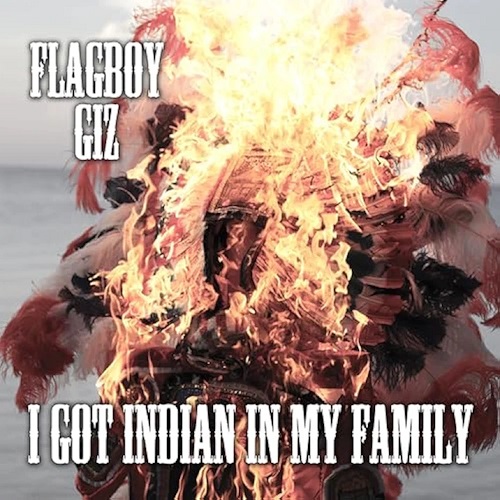
This is Mardi Gras music, designed to accompany a long procession through the city, from Uptown to Downtown. Yet even though Flagboy Giz avoids profanity and obscenity, it is unmistakably rap, carrying with it the genre’s familiar backdrop of ghetto life, violence, flashy displays of wealth, and neighborhood pride. The album also incorporates call-and-response patterns, group vocals (“Rocheblave,” “Mask That Morning”), and the emphatic rhythms shared by African American and Native American musical traditions. These two peoples share a deep resentment toward “AmeriKKKa,” a sentiment expressed on the album cover, where Flagboy Giz sets fire to his Native-inspired headdress adorned in the colors of the American flag.
On this successful album, the Wild Tchoupitoulas member makes even more visible the debt local rap owes to Louisiana’s most deeply rooted folk traditions. He reminds us that bounce music, carnival culture, and the exuberant, excessive, colorful sounds of Mardi Gras, The Meters, and No Limit Records all belong to the same continuous tradition. So don’t be surprised if it all ends up, to quote one of the songs, “Looking Like Cash Money.”
P.S. Thanks to Pure Baking Soda, through whom I believe I first learned about Flagboy Giz.