







Released on April 12, 2025.
When we said Gucci Mane’s latest protégés weren’t bad, we weren’t wrong. Even if the master himself hasn’t produced anything particularly interesting lately, he still has a sharp eye for talent. Pooh Shiesty, Big Scarr (RIP), Bic Fizzle, and BigWalkDog may not revolutionize rap, but in recent years they’ve all delivered some strong tracks. And to that list – even though he has since left the New 1017 label – we should add Daniel Bates, a Memphis rapper who began drawing attention around 2021.
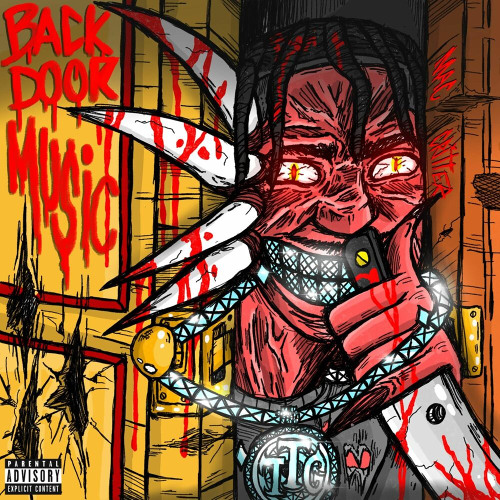
In early 2023, shortly after joining Gucci Mane’s roster, the rapper known as Mac Critter was incarcerated after being charged with murder – no small matter. But these kinds of legal troubles no longer prevent artists from releasing albums, and more than a dozen have surfaced since that fateful arrest. One of them, released this year, Back Door Music, particularly deserves attention.
If there’s one thing that sets Mac Critter apart from the other New 1017 signings, it’s that he doesn’t really sound like a disciple of the boss. His world and his beats are certainly rooted in trap music, but his rap is slower and more pained. His music is heavier, more languid, and occasionally dotted with ghostly samples (“Paint It Blue”). It also features long stretches without vocals, reinforcing the album’s haunted atmosphere. Elsewhere – on the venomous “Rage,” for instance – he ventures into the subgenre of the same name, or something close to it.
The persona, too, feels more in tune with the times. It’s far more threatening than humorous, and the expected boasts reek of sorrow and regret, as on the single “Pure Evil,” when the self-proclaimed devil Mac Critter claims that he prays to God. “They know we ain’t cool,” the rapper says as he lays out his identity as a “Trap House Baby.”
And sometimes, that works extremely well. It’s even brilliant on the aforementioned “Pure Evil,” on “Killaa,” a duet with Lefty Gunplay (the only feature here), on the slow and grimy “On Whateva With Whoeva,” on the haunting and beautiful “Befo I Knew You,” and, to a lesser extent, on “Lie For,” the only track where you can still hear – in a faintly mode – the chiming synths of trap music’s earlier days.