

Released on July 21, 2025,
via Columbia Records.
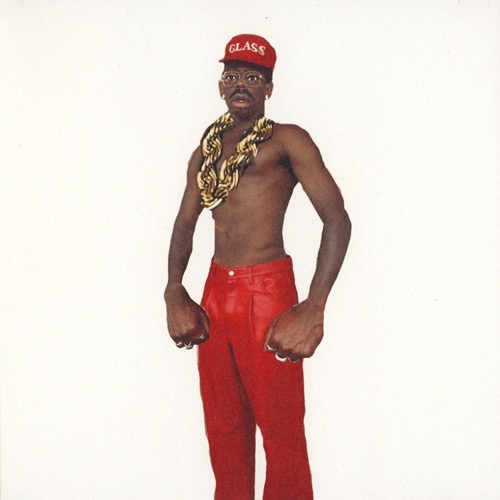
This surprise release by Tyler, the Creator is a light album, dropped without warning in the middle of the year. It seems to have been thrown together hastily, judging by its ten tracks that barely stretch beyond half an hour and its offbeat cover art. The latter also suggests a return to basics for the former leader of Odd Future, with imagery deeply rooted in 1980s hip-hop. And rightly so. With Don’t Tap The Glass, the artist wants to return to one of hip-hop’s forgotten origins: dance.
The observation at the heart of this album is the following: in an era where even the slightest of our gestures is monitored – or filmed – and where we can find ourselves portrayed at any moment to our disadvantage on social media, we hesitate to truly let go on the dancefloor. But fortunately, we have Tyler, a.k.a. Big Poe, who sets out to free us with this album devoted to dance. All dance.
Here, all forms of club rap are more or less represented: electro hip-hop, Miami bass, Atlanta crunk – Crime Mob’s classic “Knuck If You Buck” is sampled on “I’ll Take Care Of You” -, and of course the N.E.R.D. / Neptunes axis that has structured Tyler’s entire career. It goes beyond hip-hop, as traces of funk, disco, house, and drum’n’bass can also be found. The rapper even sings at times. He invites us to loosen our bodies, something expressed through dance, and also through its cousin, sex, on the torrid “Sugar On My Tongue.”
This is not the introspective Tyler of the previous album, Chromakopia, at work on Don’t Tap The Glass. His inner turmoil resurfaces only at the end, on “Tell Me What It Is,” when he searches for love and lets it be understood that he continues nonetheless to put himself on display. Elsewhere, over these funky beats, it is more the Tyler of the early days who is back in action: the acidic, acrimonious figure of Bastard and Goblin, the monster behind the glass that we’re supposedly not meant to tap. Alongside sad love songs (“Ring Ring Ring”), there are aggressive outbursts (“Stop Playing With Me”). The rapper’s lyrics are often caustic; his words are pure vitriol.
Selected line:
I don’t trust white people with dreadlocks.
Fair enough. Neither do we.
Dance, with Tyler, remains something very particular. He doesn’t completely give up being the irritable, nihilistic rapper who first made a name for himself – on “Mommanem,” for example, when he subverts his desire to dance with a harsh composition that really assaults the ears. Still, there is a favorable bias here toward simple albums that aim to hit hard, to shock, and to be effective, rather than to make art for art’s sake. Here, concision and restraint are preferred to self-indulgence and unnecessary prettiness. And luckily, through its sounds and its lyrics, Don’t Tap The Glass is exactly that.