
Released July 21, 2007,
on Cornerstone RAS and Side Road Records.
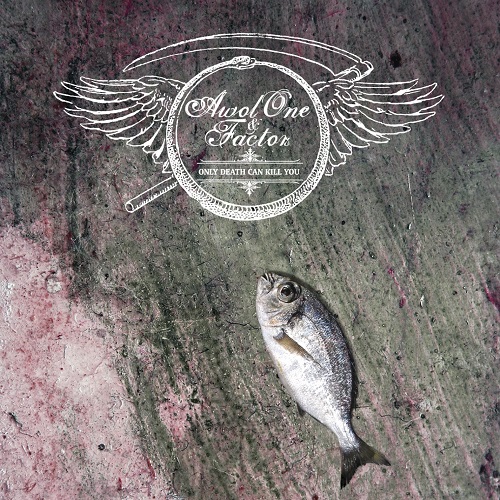
There is no question that Awolrus is a key figure in the California underground. Within his own sphere, he is a star. And yet it is hard to point to a single masterpiece. Could it be Souldoubt, the album packed with bangers? Or Slanguage, his free-jazz excursion with Daddy Kev? Number 3 On The Phone, if only for the fabulous “Carnage Asada”? Hard to say: each mixes flashes of brilliance with moments of frustration. So perhaps, above them all, we should choose the quiet, short and understated Only Death Can Kill You, his relatively late collaboration with Factor.
This meeting between a near-legend of the underground and a beatmaker as prolific as he is little-known could easily have produced something merely passable – or worse. After all, the Saskatoon producer’s collaborations with other Californians (Akuma, Existereo, Kirby Dominant) have hardly been his most memorable work. There was every reason to fear an Awol One stuck on autopilot, whining his way over the not-always-inspired guitar samples Factor is so fond of. But no. In the end, this unassuming record is a success. Here, Awol One finds simple loops perfectly suited to his perennial persona as the depressive rapper, holding forth half-drunk over a pint of beer.
When our rapper philosophizes about the passing of time (“Old Babies”), Factor brings out exactly the right melancholy guitar. When he launches into a genial track with a few friends (“Digital Angel”), the Canadian gives him just the right buoyant melody, displaying a command of variation we had rarely heard from him before. And when routine begins to set in, when the album starts lingering too long at an easygoing pace, Factor jolts it back to life with a stark, unsettling beat studded with scratches (“Smokin’ Coffee”).
And there is better still. The duo outdo themselves on “Sunday Mourning,” whose chorus features a slowed-down passage from Free’s “Mourning Sunday Morning,” while the rapper hums along and punctuates the proceedings with a “that’s right.” There is a strong chance that Only Death Can Kill You will go unnoticed, lost in the labyrinth of the two men’s sprawling discographies. And yet, even if it is not their most thunderous work, it may well be the most fully realized album either of its two creators has made.