
Published January 1, 2026,
by Parker Pubs.
JMD, Fat Jack, Riddlore and NgaFsh, Sach, Omid, Mumbles, Deeskee, Nobody, Thavius Beck, Daedelus. You rarely see these names cropping up in the best-beatmaker rankings that proliferate on social media, each more predictable and formulaic than the last. Yet right here, in these very pages, a little over twenty years ago, these people were stars. All connected, to varying degrees, to the Project Blowed scene, they and a handful of others (Kut Masta Kurt, Daddy Kev, Kenny Segal…) helped shape the sound of the thrilling, criminally underrated West Coast underground.
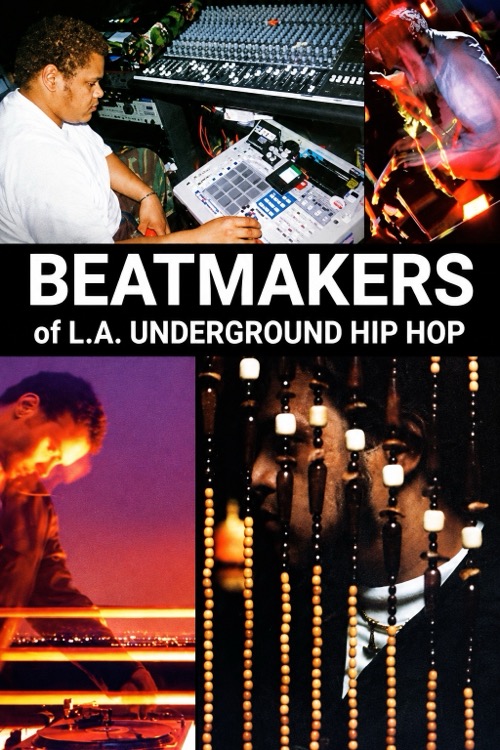
Now the time has come to document their story. Several books about the scene have appeared in recent years, focusing on 2Mex, Myka 9, Riddlore and Ellay Khule. This year, another volume in the same series, Beatmakers Of L.A. Underground Hip Hop, turns its attention away from the rappers for a moment to explore the other side of the scene: its producers (or rather, its beatmakers – a distinction we insist on making), through ten biographical portraits. Each chapter opens with an introduction by 2Mex (who has worked with just about everyone featured and pays them heartfelt tribute), before tracing the career of one of these sonic architects through an interview with the man himself, often supplemented by recollections from his fellow travellers.
And it makes for fascinating reading. Through their stories, we relive an extraordinary saga that unfolded in Los Angeles, from the late 1980s around the Good Life Café to the 2010s and the Low End Theory nights at the Airliner, and beyond, right up to the present day, when two of these figures (Thavius Beck and Daedelus) have become music professors at Boston’s Berklee College of Music. Both of these landmark scenes enjoyed their moments in the spotlight and attracted some major names (Thom Yorke, Erykah Badu, De La Soul and others all attended Low End Theory nights). Yet the story this book sets out to tell is very much one that unfolded in the shadows.
The broad outlines are familiar. But this book digs beneath the surface, revealing the backgrounds and personal lives of people we know almost exclusively through their music. There are anecdotes aplenty. Thavius Beck, for instance, explains why he dropped his stage name, Adlib, in favour of his real name: after signing autographs for some fans, he saw their disappointment when they read his signature. They had thought they were meeting Madlib…
The book also reminds us just how diverse this multiracial scene was. It brought together Black producers who were never far removed from gang life yet were also unabashed nerds, with a taste for indie rock, IDM and drum’n’bass; an immigrant who had come from Iran virtually overnight (Omid); and a kid whose background lay in skateboarding, punk and the impoverished white underclass (Deeskee). Reading about the sheer variety of their backgrounds and musical educations, it becomes easier to understand the wild eclecticism that made this fascinating little world so distinctive.
These accounts also offer a glimpse into the workings of the underground, a world tantalisingly close to the floor above, where the successful rappers reside, but where the lift is so often out of order. In almost every story, the central figure recalls crossing paths with stars, with fame seemingly within arm’s reach. There was that golden period in the 1990s, when Freestyle Fellowship, The Nonce (and, not far from them, The Pharcyde) released albums that made a real impact. The days when Abstract Rude was signed to the Beastie Boys’ label. But after that, it was largely a succession of missed opportunities.
JMD contributed to The Pharcyde’s groundbreaking sound on their debut album, and his jazzy style of rap is said to have influenced The Roots. Yet hardly anyone knows it. Master P wanted to work with Mumbles in the early days of No Limit, but the producer, committed to “conscious rap”, was put off by the gangsta excesses of the future Southern rap mogul. Thavius Beck produced music for Nine Inch Nails, but Trent Reznor reportedly neglected to credit him. Daedelus, by contrast, looks back fondly on his fifteen minutes of fame, when one of his beats found its way, almost by accident, onto one of the most celebrated albums in rap history, Madvillainy. For a while, he got to rub shoulders with his idols, even if, in the end, he slipped back into obscurity.
There are several reasons why these artists were destined to remain underground. Bad luck and dogmatic rigidity played their part, but above all, there was a certain amateurishness in the way they managed their careers and looked after their own interests. Fat Jack, for instance, was delighted to receive $200 for a beat he made for 2Pac on Thug Life. According to his manager, he could have asked for $7,000…
Here we encounter the familiar tragedy of the underground: artistic purism and bitterness, each feeding off the other. And for beatmakers, more than anyone else, working as they do in the shadow of rappers, that bitterness is an ever-present threat. Yet as we turn the pages, we are also reminded of all the wonders this scene produced. We remember that Beneath The Surface, Soulmates, The Weather, Ravish and Thru are all outstanding records. And some of them are bona fide rap classics.